Showing posts with label science; shadowy nerds. Show all posts

15 January, 2010

Scalpel in My Head, Wielded by Mine Own Hand

I am an imbecile.

I am also a genius.

How do I manage to operate simultaneously at both extremes of intelligence? It's not as simple as a statistical mean, but rather a wild and exhausting oscillation between them, careening from high level metacognition to struggling to tap out a single important word that I can see in my posterior inferior frontal gyrus, stubbornly not moving despite my need of it.

Simply put, I wouldn't have the slightest clue that I am intelligent if not for others around me reinforcing their perception of my intelligence upon me. This isn't to say that differences in processing speed, retention of information, or synthesis of broad principles would not have eventually become apparent to me, but they would have taken quite a while as I, and others, have found myself to be profoundly dense when it comes to the nuances of human emotional social behavior. Basically, this stems from the contrast between feeling my sentience buzz with tantalizing data and sometimes feeling remarkably stupid.

I am aware that feeling stupid or feeling smart is an entirely subjective internal experience. Furthermore, it is likely that feeling remarkably stupid is actually due to being able to perceive my mistakes and/or shortcomings in their full implications and on (perhaps too) many scales. I am not writing this to polish my own ego here, this is speculation. I have been very frequently puzzled by other peoples' behaviors, and this is not the pleasant, relaxing kind of puzzled where there is some verifiable formulation of the question to begin with*, but the kind of maddeningly unquantifiable mystery that follows no logic except self-interest.

I don't understand most people. I believe I understand a large aspect of them, but I don't understand why. I have met so many people who seem content to live in the shallow end of the pool, who have never regarded information as anything other than temporary and fleeting, and I cannot help but wonder why they are content with it. Sure, everyone becomes a philosopher on their deathbeds, but what of the rest of their time before it? I cannot relate my frame of experience to theirs. I make no claim that my mode of thought is superior. I cannot comprehend satisfaction without questioning the vast beauty and complexity of the world sparking all around me.

On the other hand, nerds and scientists are comprehensible people. They operate on the same strong currency of curiosity and wonder that I do, and as such I find them much much much more relatable than most "normal" folks. Sometimes I amuse myself by trying to view the nerd/hacker/scientist cultures of which I am a part like I am an outsider to it, and the way that we interact with one another is in many ways fundamentally different. We are scientists, nerds, or hackers because we love what we do and are deeply emotionally vested in the outcome of our clever work. We question the world around us and reinvent our relationship to our understanding thereof frequently, and that, more than anything, is what sets intelligent people aside from others.

*E.g., a jigsaw puzzle has a solution if the complete set of pieces are placed in the correct spatial sequence, or the structure of a protein may be hacked to test its function in measurable environments.

25 April, 2009

Nerd Frame 2: The Continuance

7415 3n71r3 p057 w1ll b3 wr1773n 3n 13375p34|<.

4c7u4lly, 1 d0n'7 h4v3 7h3 p4t93nc3 70 d0 7h47, 7h3r34: 4p0l0G135

To those of you who could easily read the above 2 lines: congratulations, you're a nerd. That isn't to say that everyone else who couldn't read them isn't a nerd, just that they've different specialties.

One of the tensions between intellectuals and wider society is that society prescribes a single nerd frame to all nerds irrespective of our diversity. This allows society to get away with marginalizing us stereotypically as unhygienic, cerebral, and weak while we feel unfairly smashed into ill-fitting frames. This dysfunctional dynamic perpetuates nerd isolation and insulation.

In my previous post on this subject, the commentators suggested that nerds are socially isolated because we are unable to climb out of the deep wells of our minds.

But what if the problem is not internal with us, but rather external in that we have no where to climb to?

As nerds we are accused of being insular and having wolf-pack social dynamics (small groups of like-minded nerds with clear hierarchies [who's the PI? who's the most 1337?]). We're also accused of being aloof eggheads with no communication skills. Both of these are true to at least some extent.

Since society is depend upon us nerds for technology, science, medicine, and George Lucas' box office success, why is the onus upon us to make ourselves understandable? It it probably overly idealistic, but I don't think it's unreasonable for society to at least meet us halfway and learn some of our scientific dogma. We as scientists are charged with creating knowledge and disseminating it to the public (which we do to varying degrees of success), but there comes a point at which the knowledge we create simply cannot be watered down any more*. But when we fail to communicate the relevance of what we do to a lazy society, we're just labeled as nerds in the derogatory sense and written off to our labs and equipment.

This is frustrating, and I am frustrated. I want so badly to be able to educate the public, to inspire critical thinking, to share the depth with which I view the world**, at least see questions deeper than "Uh, like, boogers!". But in the end I can't escape my own nerdness. I lack a socially normal frame through which to communicate. I don't have a way to relate to wider society. Save a few well-placed strong blows to my head, I can't un-educate myself and that education has tempered my thinking.

But when coming back to whose frame is best, nerds' or society's, it now boils down to education. If more people were more educated, society's mean frame would move closer to the nerd frame. Then we, as nerds doing science, would be able to keep the flow of information and dialogue going less one-sidedly. It'd be a net bonus.

However, this brings up another question that I'm going to pose to you: does education increase nerdness or is nerdness an inherent and immutable personality trait?

*This is where alternative medicine pseudoscientific quackery is conceived and born.
**Or at least as I like to think so.

19 April, 2009

Nerd Frame 1

Do we, as science nerds, alienate others as a matter of course? If so, is this a defensive mechanism or a simple inability to climb out of our minds and relate to non-nerds?

I'm not trying to claim that all science nerds are awkward introverts, just some of us. There seem to be some scientists who are very very good at interacting with normal people, but there are just as many, if not more, who wander around public places looking either very confused or somewhat huddled into themselves.

Let's be honest: human social communication is so deep and complex and, frankly, damned weird that some of us will choose to immerse ourselves in protein interaction kinetics instead of going to parties.

What do you think?

(There's a point here that I'll get to later.)

14 April, 2009

Cost of Science

We all know science is expensive. Satellites and particle colliders costs tens of millions of dollars, flow cytometers cost as much as a mansion in Detroit, confocal microscopes can be had for the price of a gently used Cessna. But why is it so expensive?

I understand why large equipement is expensive. A BioRad pentaplex Q-RT-PCR thermocycler system costing $35,000 makes sense given how complex and sensitive it is. A -80C freezer costing $5,000+ makes sense given the sheer amount of materials that go into making it. But it's not just the large equipment that's so expensive. Little, common, everyday scientific supplies are also quite expensive. And disproportionately so.

Fisherbrand sterile Petri dishes cost $0.30 each at list price, and they're really only good for a single use. Acros Organics yeast extract is ~$250/kg at list price. My favorite general dissection scalpel blades (No. 22s), also only good for one use, cost $165 for just 100 blades, and that's Fisherbrand*. Reusable Fisherbrand glass pipettes are $10 each. And sure, base cell culture media are cheap (500ml RPMI $13, 500ml DMEM $4), but when you factor in the cost of adding FBS (~$500/L) to make them complete the costs add up real quick.

In a consumer market these items wouldn't cost nearly so much. 100 straight razor blades, a similar amount and grade of metal as scalpels, cost $9 on Amazon. Fleischman's yeast is $17/kg. Yes, these aren't the same exact products. They aren't specifically made for science, but they are made of similar types and quantities of materials. Does standardization of research supplies really command a 500%+ markup in price? Is the quality really that different?

This adds up to another barrier to entering biomedical research as an amateur, hobbyist, or newly minted PI. Daily disposables cost a busy lab so much money that they can quickly eat through large grants. The thing is, though, is that we're more or less at the mercy of the companies providing these products when they choose their prices. We are a small niche market, and as such the specialization of any product to fit our needs as researchers is going to cost much more than it otherwise would in a larger market.

There are 2 possible solutions to this:

1) More people need to start using scientific supplies for other uses. This will increase competition between Fisherbrand, Denville Scientific, and VWR and force them all to lower their prices. Erlenmeyer flasks are heat stable, so why not use a 2L flask to make pasta at home? Borosilicated tall beakers run about $6 each, and have the advantage of being able to measure the components of your mixed drink in milliliters. If you're worried about your weight, try the Petri dish diet, where you only get to eat a Petri dish's worth of any given food in the space of an hour, so long as that food is not lard of deep-fried chicken skin. I, for one, think that a 10ml glass pipette would make a handy home defense tool shiv.

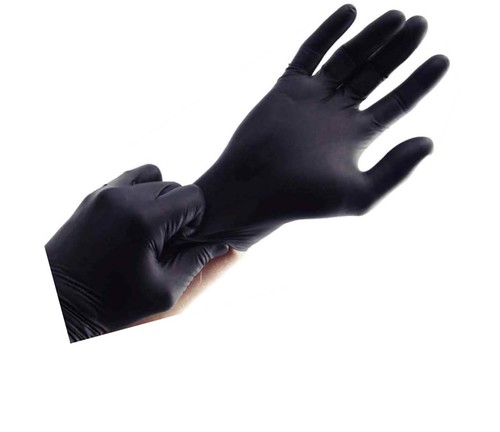
2) Conglomerate negotiations. The MRU I work at has so many labs that each department has a supplies and ordering coordinator who negotiates special permanant discounts for all supplies needed. With this, the $0.30/Petri dish above becomes $0.10 per. Our black nitrile gloves (what else would a Mad Scientist wear?) cost about $0.01 each rather than the $0.05 listed. In short, the ordering coordinator uses the weight of the institution's aggregated lab purchasing parity to reduce costs across the board.

However, this option isn't really available to individuals, informal groups, or SLACS. Once again raising the costs of admission to basic science.

The high costs of science also don't do much to charm the public when they resent how their tax dollars are being spent (although I really think they should be looking far more angrily to the five-sided building than to ivory towers).

And, finally, a broader question: Do industry labs pay full cost for supplies or do they also negotiate price breaks?

13 April, 2009

Our Shrinking Cloister

I've got a beefy diatribe to spleen out.

I have seen on the Interwebz in the past several months a great deal of discussion about DIY biology research and whether or not it's safe. I've seen big-wiggy biomedical researchers and computer sciencers weigh in on this. I suspect both are missing the point.

Currently, biomedical scientists are arcane magicians working quiet miracles in the shadowy corners of public consciousness. We're nerds of such deep inaccessibility that we become artificers of mythical proportion and prophetic comprehensibility. The public does not understand what we are doing or why it takes so long for progress to be made; we're supposed to produce flash-bang-holy-shit magic tricks on demand even as we dread being questioned why our research matters. The terms we use, the depth of the knowledges that we plumb, the datasets that we construct, the very equipment that we use all serve to enforce an idiosyncratic barrier that requires intelligence, time, and flinty-nosed mule-like stubborness to break into.

This cloister which we've inherited does indeed have its advantages. We can go to work in the lab with other fully competent people whom we may easily assume are familiar with basic genetics and protein dogma. We can develop our presentations with great detail, sculpting each to the level of specialization of each audience. We can dive deeply into a heady rush of informational give-and-take, intellectual play, and experimental thrill. However, I find that this cloister is slowly suffocating us.

When our predecessors enshrined themselves and their disciplines into ivory monoliths of thought, they also shut out nonconformists, radicals, and fundamental innovators. Those that don't deign play the game of academia or lie out the sides of their mouths about career intentions are inevitably shanked with a glass pipette and thrown under the steam roller of their committee's disapproval. An entire industry has birthed itself in response to the standardized demands of academic science, and has made massive profits while doing so (and while it's important to have data standards, it is also true that standards become economic commodities that eventually get more and more expensive to maintain, and are also exclusive of other ways of generating data). By setting the bar for entry to biomedical science so very high, we've effectively shut out everyone who cannot pay to play. This includes independent hobbyists, start-up biomedical firms, and newly minted PIs.

This is due to 2 structural features of academic science:

1) Physical plant/equipment. Think about the sheer variety of specialized equipment that a molecular biology laboratory has. Gel docks, power sources, block heaters, incubators, freezers, microcentrifuges, flow cytometers, UV photoimagers, flow hoods, Bunsen burners, shaking warm water baths, RNase-free chambers, etc. etc. etc.. All of this stuff costs huge sums of money, effectively making the entry costs of biomedical science so very high that no one but the most affluent, in private funds or grants, can hope to even try to play.

This parallels the initial development of computer science. The first computers were so massive, specialized, and expensive that computer science and the study and application thereof were but a fringe niche. Today both are ubiquitous. The fundamentals of computing science haven't changed. But the entry costs have. With the advent of the personal computer costing less and less, more and more nerds have been able to pour into computer science, coding and hacking and building the very environment in which Internet-users dwell. Lowering the entry fees has allowed more people to play and succeed in an arena previously dominated by UNIVACs and their attendant haughty acolytes.

Now, we as biomedical researchers are the high priests of Biology. The knowledge for a talented hobbyist to make real progress exists, as does the capability. The textbooks are written, the databases are public, yet we remain skeptical and the equipment remains prohibitively pricey*.

2) Computer scientists tell their computers what to do and hope they didn't make a mistake. Biologists grope around in the darkness of genetics with enzyme fingers and break something, hope it was what they meant to break, and then hope that it has a measurable outcome. Essentially: they start out knowing what they're doing and we hope we know what we did when we're done.

This also hinders inclusivity in the biological sciences inasmuch as detailed and deep knowledge is required to interpret data or plan a meaningful experiment. Computer science can tinker with code components for a couple hours and a bright person will eventually figure out that $x assigns a variable while @y assigns an array. Meanwhile, the same person could spend weeks, years even, tinkering with E. coli before figuring out that LacI is a protein that acts upon lacZ genetic material.

Unlike the first obstacle, however, this one is much much more difficult to overcome. We could easily rig a water-jacketed incubator by using a styrofoam cooler, Tupperware, and a tropical fish aquarium pump. We can't rig knowledge nearly so easily. To a degree, this is what textbooks are for. Yet at the same time, we've got the most valuable information hidden behind an elaborate series of paywalls.

This also hinders biomedical sciences being relevant. Yes, we know it's important because we work out of compassion, trying to improve knowledge to ease suffering and improve lives. But society doesn't necessarily know that. Sending rockets to the moon was concrete and real and it beat the Ruskies. Growing dynein engines in Petri dishes isn't nearly so concrete. So we're back to being shadowy nerds, toiling on nerdy stuff that doesn't matter. It's here where our cloister begins to strangle us, because when the public does not understand what, why, or how, even to the most shallow degree, what we are doing and what it's potential payoffs are, we have to go on the defensive automatically to keep justifying our labor and its expense.

We'd better serve ourselves by spending more time on the offensive, engaging the public and demystifying what we do, maybe even helping out the DIYers. By embiggening the pool of people thinking about biomedical research issues and increasing the hunger to do something about it we'd be setting up a positive feedback loop, even if some of the greybeards may fear the potential for nontraditional competition. In the end it can only help us, you know?

*To this end I favor the development of biological hacker spaces, similar to those featured at www.hackerspaces.org/wiki. In these, members pay a monthly fee for access to common equipment. This collectivism may be the only viable way to surmount the high entry costs of biomedical research.