28 July, 2009

Scientists' Duel Outcome

Hermie won*.

The final score was 205 Hermitage, 195 Toaster.

Poop.

But at least I only lost by 10 points instead of only getting 10 points!!! She graciously extended the offer to me to not count the midnight dark horse Erk, which would have resulted in me winning, but as I am a Mad Scientist with integrity, I decided that responsibility to the rules was more important than my own ego and we counted their votes anyway.

However, let it be known that this is far from my last duel!

*Gloating can be found here.

24 July, 2009

Optimizing Algorithms for Brain-Machine Interfaces

ResearchBlogging.orgImagine waking up trapped in a prison of your own flesh, blinking awake in the dull glow of a softly bleached hospital room. Your arms and legs are unresponsive to the will to move them, to the simple desire to reach up and scratch the itchiness of morphine from your eyes. Nothing happens, nothing responds, nothing moves, nothing feels. You are an immobile head trapped on an unresponsive body, and no matter how loudly you scream against the walls of your confinement from inside your head, nothing happens.

Luckily many quadriplegics retain the ability of speech and independent respiration. However, their quality of life, and that of the more unfortunate patients who are fully lucid but cannot communicate with the outside world by anything more than eye-blinking Morse code, remains severely compromised due to poor rehabilitation prospects and dependency upon caretakers. Perhaps one day we'll be able to repair injured nerves and restore connectivity with the rest of the body, but for now we're beginning to work out how to directly interface the brain with mechanical actuators. The goal is to develop an interface through which a paralyzed patient could control a machine that would augment their standard of living using nothing more than their mind and some technology.

Nerves and computers and both conveniently electrical. The problem is that they each operate on very different electrical schema. With computers we more or less know which transistor is storing which bit of information and have discrete units of conductors, resistors, capacitors and such. But it is very difficult to isolate the behavior of a single neuron in situ, so instead we use mass behavior of relatively large numbers of neurons to try to approximate functional firing chains. To translate the chaotic, non-discrete signal from neurons into discrete signals for machines, we need an algorithm. And to develop that algorithm, we need electrode-implanted animal models (unrestrained monkeys in this case) and scientists who can do math.

Li and Nicolesis et al have developed a novel modification of pre-existing brain-machine interface algorithms in "Unscented Kalman Filter for Brain-Machine Interfaces". Previous brain-machine interface algorithms were either linear approximations or non-linear particle filters. Linear filters (such as the Wiener and standard Kalman filters) didn't do as well approximating the behavior of neurons as particle filters, but they were much faster and computationally cheap enough that they could be used in real time. In general, particle filters (such as SSPPF) were very good at modeling the behavioral input of neurons, but they were so cumbersome that each iterative point required computing time that put it outside the range of useful real-time applications. Li and Nicolesis et al have modified a Kalman filter such that it uses a nonlinear tuning method (a quadratic model instead) and adds historical regression with multiple time offsets to help predict future behavior patterns. The quadratic tuning model integrates previous neural activity to arm movement models (the cosine tuning model, tuning to speed, tuning to distance of reach) into one cohesive and flexible equation. The historical regression with time offsets gives the model a short memory that allows it to quickly predict possible future states of neural activity to arm movement correlates and optimize them based on current neural activity input.

Implementing the quadratic neural tuning model greatly improved the accuracy of predicted neuron firing behavior, which means that the algorithm was better at interpreting the noisy signals from the neurons. At the same time, the historical regression made brain-activity-guided movement of the prosthetic hand* smoother and also helped to tune the monkeys' training on the algorithm by operating as a sort of continuous optimization that kicked out inefficient processes to improve overall performance. This quadratic model also significantly improved the reconstruction of the monkeys' desired hand movements during real-time tests in comparison to standard Kalman and Wiener filters.

In effect, this new algorithm construction allows for more accurate control of a prosthesis, with low tuning demands and progressive learning of efficient movement correlates. Ideally, this will one day allow paralyzed patients to accurately control mouse cursors (better than existing technology, anyway) or robotic prostheses that will greatly improve their quality of life. This technology may still be crude, but it is progressing rapidly and with great potential. I, for one, welcome the prospect of an auxiliary robotic arm. It would be great for my benchwork productivity.

*In this case, a cursor on a computer screen.

Li, Z., O'Doherty, J., Hanson, T., Lebedev, M., Henriquez, C., & Nicolelis, M. (2009). Unscented Kalman Filter for Brain-Machine Interfaces PLoS ONE, 4 (7) DOI: 10.1371/journal.pone.0006243

___________________________________________________


This is my entry in the Scientists' Duel that Hermitage and I are fighting for the title of Most Nefarious. Her entry is here. You, dear reader, will decide who wins. As of 12:00AM, 7/24/09, you have 72h to vote. You get 100 points to divide between Hermitage and I as you see fit. Report your scoring in comments. At the end of 72h we will tally up the points and determine the winner.

21 July, 2009

BATTLE BATTER ANNOUNCEMENT!

This Thursday a 5pm EST a mighty and fierce battle will break out in the sciencey blogosphere. I know this because I will be one of the combatants, and I intend to kick some serious arch-nemesis ass! This will not be any ordinary flame-war or troll-con, no, this will be far more violent, far more bruising, and inflict far more collateral damage on the surrounding countryside.

This will be the duel for the TITLE OF MOST NEFARIOUS!!!

Hermitage
and I dispute and have fought at great length to determine which of us is more nefarious. Indeed, entire dinosaur armies (my shock troops) have been obliterated into smushiness by her trout-gore spewing bento cannons (her favorite weapon) and I have fried literally tons of her self-replicating bunny robots with the stabby teeth with my mighty Tesla coil cannons! The countryside can not support such vicious and scientific warfare for too much longer, so Hermitage and I agreed to settle this dispute like proper scientists: a paper duel.

Because each of us is rather fond of all of you, we chose an open-source PLoS ONE paper upon which to wage war: Unscented Kalman Sensor for Brain-Machine Interfaces. This way each of you can see the original source.

The battle will not be over the paper itself, but rather for your hearts and minds. Hermitage and I are each going to blog about the paper cited above. Then you, our lovely readers, will each get 100 points to assign between us as you see fit. Whomever has more points after 72h for voting will be declared the winner.

I tap out this announcement in order to give you fair warning. Shore up the walls of your own individual Internet homesteads, put the fine china in the cellar, and get yourself a hammer to beat at us if we encroach too closely to your territory in the blushing heat of the battle.

Watch out, it's coming!

Also:
Dear Hermitage,

Sincerely,
Toaster

20 July, 2009

Book Meme

DuWayne Brayton has tagged me with the book meme. I didn't follow the rules precisely. There are probably more than 15 books below, and I took something like 20odd minutes to write and hyperlink all this together. The books that follow are in no particular order of favor. I don't necessarily agree with the viewpoints espoused in all of these books, but they nonetheless seem to be persistent sticks in the mud of my mind.

In the Name of Science: A History of Secret Programs, Medical Research, and Human Experimentation, Andrew Goliszek
Mutants: On Genetic Variety and the Human Body, Armand Marie Leroi
The Language of Life: How Cells Communicate in Health and Disease, Debra Niehoff
Janeway's Immunobiology
Neuromancer, William Gibson
The Complete Essays of Mark Twain
Maus I + II, Art Spiegelman
Percy Gloom, Cathy Malkasian
The Brief and Wondrous Life of Oscar Wao, Junot Diaz
One Hundred Years of Solitude, Gabriel Marcia Marquez
American Psycho, Bret Easton Ellis
Ender's Game, Orson Scott Card
Green Eggs and Ham, Dr. Seuss
Stiff: The Curious Lives of Human Cadavers, Mary Roach
Sex, Time and Power: How Women's Sexuality Shaped Human Evolution, Leonhard Shlain
Grimm's Fairy Tales
A Scanner Darkly, Phillip K. Dick
American Pastoral, Philip Roth
Catharsis, Andrzej Szczeklik
Lord of the Rings trilogy, J.R.R. Tolkien
Amor y Cohetes (Love and Rockets), the Hernandez Bros.
The Jungle, Upton Sinclair
1984, George Orwell
The Grapes of Wrath, John Steinbeck
Alice in Wonderland, Lewis Carroll
The Futurological Congress: From the Memoirs of Ijon Tichy, Stanislaw Lem
Frankenstein, Mary Shelley
Watchmen, Alan Moore and Dave Gibbons
The Portrait of Dorian Gray, Oscar Wilde
James and the Giant Peach, Roald Dahl

Now then, I tag Arikia Millikan, Hermitage, Science Bear, Hexadecimal, Tig, Stephanie Zvan, Ktbug Ladydid, Lost Marbles, and Quietandsmall. Let's see what all of you have!

AHAA Addiction

Every day we labor in the lab, hoping to build knowledge into a coherent and publishable narrative, pursuing understanding. Often I have heard scientists speak of the "A-HAAAA!!!!!" moment where months' worth of laborious experiments snap into place and reveal a new bit of truth, and how addicting that moment is, how it is akin to pure joy or The Perfect Cookie. This is a wonderful goal, and somehow it keeps us working long hours for little pay and even less respect. But, admittedly, it's hard work.

I have found that every once in a while, as I'm reading along through some papers, I come across a well-supported point or elegant experiment that is just SO DAMN AWESOME that my mind has to stretch a little farther to accommodate the new view of the Entire Frickin' Universe that that paper has just jammed into my eye sockets. It's like licking lightning*, but less painful. And these papers don't have to be recognized across the scientific sea as revolutionary to make that difference. I still know approximately nothing, inasmuch as my scientific knowledge is but a 5uL drop in a 3L pond of ignorance. And as such, papers that fasten together what were previously disparate informations (for me, although that may have already been old hat to the greybeards) can be just as mind-boggling.

Apparently I have a knack for finding these papers. The other day in the lab after his committee meeting, the grad student turns to me and sez, "You failed me there! You're my Master Downloader, and you didn't catch the paper that completely changes 1/5th of my thesis!". He was kidding, I think. I have yet to read the paper in question. From the abstract, it's been recently found that IL-12Rp35 doesn't just participate in IL-12 signaling, but also in IL-35 signaling, which has an antagonistic effector function against IL-12 (IL-12 is pro-TH1 T-cell response, IL-35 is pro-Treg T-cell response). This is on top of previous knowledge that the IL-12Rp40 subunit is also part of the IL-23R complex (IL-23 is involved in TH17 T-cell differentiation and function).

These frequent revolutions of our understanding are unequivocally Good Things. Sure, it makes our lives difficult and increases the range of possibilities in which we make asses of ourselves in front of our colleagues, but at the same time it's the very stuff Science is made of. If we cling to out-dated theories and disproven information, we will not produce accurate new information and we will fail as scientists. This necessary nimblemindedness is sometimes frustrating, but at the same time it allows us to have those A-HAAA!!!!! moments all the more often without doing all the benchwork ourselves.

To date, there are 3 papers that stick out in my mind as having been particularly eye opening:

1) Käfer J, Hogeweg P, Marée AFM (2006) Moving Forward Moving Backward: Directional Sorting of Chemotactic Cells due to Size and Adhesion Differences. PLoS Comput Biol 2(6): e56. doi:10.1371/journal.pcbi.0020056

I didn't see this when it first came out, but when I finally read it and worked through the differential equations it really made a huge difference in how I view organogenesis. I wasn't much interested in the functional dynamics of Dictyostellium morphology, but the work on cell sorting and migration based entirely on size and net kinetic energy was really really really cool. Blogged here.

2) Venegas J, Winkler T, Musch G, Vidal Melo M, Layfield D, Tgavalekos N, Fischman A, Callahan R, Bellani G, Harris R (2005) Self-organized patchiness in asthma as a prelude to catastrophic shifts. Letters to Nature. doi: 10.1038/nature03490

This was some major computational sweetness wrapped up in massive physiological awesomeness. It integrated all the separate physical forces at work on individual alveoli to integrate them into a model of whole-lung pathology. This was tight work, very well-done, and immediately relevant to clinical practice as their model revealed that inhaled anti-asthma drugs would likely affect only the non-spasming portions of the lung airways, although it also didn't exactly make an alternative recommendation. Anyway, still relevant. Blogged here.

3) Artis D. Epithelial-cell recognition of commensal bacteria and maintenance of immune homeostasis in the gut. Nat Rev Immunol. 2008 Jun;8(6):411-20. doi: 10.1038/nri2316

This paper assembled a major heap of evidence and thoroughly blasted the simple view of intestinal epithelial cells as humble nutrient transporters that I had been taught to ragged shreds. Intestinal epithelial cells aren't just lining for the gut, they actively interact with the massive volume of microorganisms inhabiting our guts and modulate both the ecology thereof as well as the responsiveness of the innate and adaptive immune systems. Intestinal epithelial cells even express MHCII! As far as I can discern, this paper has helped to provoke a flurry of gastroenterology papers that discuss the rapidly evolving view of the microbiome, even going so far as to label our intestinal microbiome another metabolic organ**. Blogged here.

So, dear reader, what papers have changed your world-view and why?

*Don't try that at home. It tastes terrible.
**If you want to look smart to a gastroenterologist, drop "TSLP" casually into conversation. TLSP = thymic stromal lymphopoeitin, it's secreted by intestinal epithelial cells to attenuate inflammatory TH1-type immune responses to the bacterial antigenic signal from the gut microbiota. It kinda skews the response towards TH2 effectors instead.

19 July, 2009

Of Superheroes and Pirates

Each summer, Ann Arbor, Michigan subjects itself to a massive art fair that usually draws 350-500,000 people into town to view and buy stuff. Naturally, since it was a crowded environment with delicate and expensive stuff crammed tightly together, Toaster thought it'd be an excellent idea to get a large-ish group together to dress up as charmingly pathetic superheroes and play Tag. So we did.
Toaster, The Superhero, having a blissfully unaware Spiderman 3 moment.

Left to right: P-par, Tie Fighter, The Cloaked Librarian, Punkupine, Zebragirl, Toaster, Hufu Transformer, and Skrull. It may dismay (or delight) you to know that 5 of the people present here are actually scientists by day. If it dismays you, dismiss us as Mad Scientists.

Left to right: The Cloaked Librarian, Toaster, and Hufu Transformer. We know we're badass.

Childrens' reactions to seeing us (excitedly jumping up and down, staring and grinning, asking their parents whether we could really fly) just reaffirmed my empirical knowledge that too many adults are stuffy dunderheads. Sure, be responsible and stuff, but it's silly--very silly--to be so full of yourself, and so vain, that you deny yourself fun for fear of looking like an ass. Or maybe we're just weird.

And then tonight there was a concert with a pirate song band followed by a burlesque show, which had a Star Trek-in-the-ocean theme. I watched Dr. Spock get mobbed by stingrays in pasties, and the ribbon encircling my hat (because, of course, I was also dressed as a pirate*) was part of the North Pacific Trash Gyre's costume that she abandoned throughout the course of her routine. This was all followed by a massive dance party that had us dodging glitterbombs and slipping on bubbles.

*You may wonder what kind of pirate wears a top hat. Well, to put it simply, fancy motherfucking pirates wear fancy motherfucking hats.

18 July, 2009

In Defense of Cliches

Bora Zivkovic of A Blog Around the Clock and Ed Yong of Not Exactly Rocket Science alerted me via Twitter to an article in Wired Science by Betsy Mason entitled "5 Atrocious Science Cliches to Throw Down a Black Hole". In short, the article claims that "Holy Grail", "Silver Bullet", "Shedding Light", "Missing Link", and "Paradigm Shift" are overplayed, tired terms that should be banned from scientific reportage.

Betsy Mason is wrong.

We need cliches. We depend upon cliches, and cliches are quite useful in the proper context. While it may be true that the above terms do get thrown about quite a bit, they're still quite useful. Science journalism is already a convoluted field that must continually walk the line between being too esoteric for its mainstream, non-scientist audience and maintaining proper accuracy to satisfy its scientific constituents, which keeps information flowing. Banning the use of any widely understood vehicles for explanation just raises the barrier to effective communication between science and the public. And when we, as a scientific community, have already made it clear that we're not usually pleased by the transmission of our findings to the public through the prism of science journalism, do we really need to throw in even more barriers?

This article indulges in a great deal of unfortunate professional myopia. From the perspective of a scientist, calling research, such as active in vivo RNAi therapy, the Holy Grail of cancer research will seem inaccurate given the breadth of other therapies being developed to combat cancer. It may be more accurate to place RNAi therapy in the context of all the other therapies, from advanced laser ablation at the level of individual cells to cytolethal fusion proteins, but with this accuracy comes a great sacrifice in public comprehensibility. Science is detailed, science is convoluted, and science is very nuanced. But unless we're willing to write and peer-review multi-chapter articles for the popular press, if those outlets would even carry the required tomes, we must tell a complex story simply and linearly in order for anyone but the most educated and avidly interested members of the public to understand it. Using widely understood cliches as vehicles to convey that comprehension is not just necessary, it's laudable.

I do not mean to impugn the intelligence of the general population. Perhaps naively, I still believe that the public is usually smarter than we give them credit for. But at the same time, scientific communication is a form of technical communication with clearly defined words and standards. We use "attenuated", "potentiated", "significantly", "stochastically", "sufficient", and "necessary" in very specific ways that don't necessarily* translate into normal, everyday public usage. We can't well use these standards to communicate effectively to the public, instead we must speak to the public on the public's terms, which by and large will involve either sports analogies or cliches. The above maligned cliches are here to stay, and they remain quite useful. If they continue to help convey broad understanding of scientific concepts, then I will continue to welcome them and their use.

*Like that.

UPDATE (tweets):
[@ToasterSunshine] @BoraZ @edyong209 | In defense of the "5 atrocious science cliches": http://bit.ly/15vgZL | Must speak to the public on the public's terms.

edyong209@ToasterSunshine You present false choice between cliches and jargon. Entirely possible to write lay-friendly copy w/o cliches.
edyong209@ToasterSunshine Or at the very least, without seriously misleading cliches.

ToasterSunshine@edyong209 Yes, sometimes cliches may be overused/misleading. But to call for a ban takes tools away from communicating scientists.
ToasterSunshine@edyong209 Scientists get jargon + don't need cliches or analogous metaphors as vehicles for understanding research. Public probably does.

edyong209@ToasterSunshine If tools are crap, they won't be missed. Good writers/communicators ought not to rely on cliches *anyway*.
edyong209@ToasterSunshine Neither article nor I calling for end to analogy/metaphor but end to MISLEADING ones.
edyong209@ToasterSunshine Again, I think you're presenting false choice between jargon and cliches. Metaphors are good but we can do better.

betsymason@toastersunshine I don't advocate a ban on metaphors for science, just the most overused, hyperbolic & annoying cliches. We can do better.

ToasterSunshine@edyong209 @betsymason I don't dispute that "paradigm shift" is overplayed. I do stand firmly against anything that attenuates science comm.

edyong209@ToasterSunshine Not attenuation. Sci-com benefits if misleading terms are lost, writers forced to think creatively. Atten'g BAD comm= good.

ToasterSunshine@edyong209 Agreed less bad comm good, but cliches not always misleading/bad. Cliches often help capture interest and sustain story reading.
ToasterSunshine@edyong209 See rec Herceptin research: "Herceptin magic bullet against breast cancer stem cells" vs. "Herceptin inhibits even HER2- tumors".
ToasterSunshine@edyong209 HER2 = jargon, but HER2 also absolute key to story. Accurate inclusion in headline turns general audience away. Need interest.

17 July, 2009

Reading

Aside from scientific papers and comic books*, I don't do much reading any more. I can't remember the last new thing I read for fun. Maybe it was World War Z by Max Brooks, and that was well over a year ago. I mean, I have read Neuromancer by William Gibson since then, but I tend to do that annually, so it doesn't really count.

The problem is that whenever I sit down to read anything, even a comic book, which is quick and awesome, I feel guilty that I'm not off reading scientific literature instead. I've got a stack of unread papers rapidly approaching the thickness of my head, and I have a large noggin. I see something that looks really interesting, read the abstract, and print it off to read later. Problem is that all too often it doesn't actually get read later, it just gets buried under everything else I've been meaning to analyze and forgotten.

But at the same time I really miss curling up with a good book and reading away.

So, dear reader, what do you recommend? Any great books you've recently parsed?

*Although I am also reading "Makers" by Cory Doctorow as it comes out, serializedy, on Tor's website. It's what made me realize I miss reading stories.

16 July, 2009

The Invisible Hand

The current global recession notwithstanding*, I have some major beef with economics in general. Economics exists to describe, regulate, and predict the markets, yet it inevitably fails to recognize reality and only perpetuates an unfortunately narrow self-interest in the majority of its participants. I posit:

1) The self-regulating "invisible hand" of the markets that supposedly guides consumers en masse to the best possible outcomes is nothing more than a foolish myth.

2) Economics pretends that it is uniquely exempt** from basic thermodynamic principles.

The invisible guiding hand is a convenient white lie that humanizes the volatility of markets, which amplify human indecisiveness and greed, and makes them seem comprehensible. This is pure fluffery at its least ingenious. The invisible hand's actions throughout history have, by and large, only served to increase the wealth of those who could afford to speculate within the markets, those who had money to risk and milk. It is entirely true that the invisible hand will guide consumers to purchase equivalent goods at lower costs and thereby benefit the producer who is able to manufacture those goods at the lowest marginal cost. But the same time this effect will not increase the purchasing parity or real wealth of the consumers themselves unless we insist on qualifying wealth by measurement of cheap plastic tchotkes. The invisible hand excludes benefit to the poor by marginalizing their purchasing to the necessities and using them as labor. The latter effect is especially apparent in third-world sweat shops churning out luxury items for industrialized nations' consumption. This disparity between benefit to the rich and cost to the poor is starkly visible in material trade and manufacturing between wealthy consumer nations and poor producer nations.

The North American Free Trade Agreement (NAFTA) effectively removed all barriers to trade between the United States of America, Canada, and Mexico. Large businesses in the USA and Canada have benefited from the cheaper labor available from Mexico even as their own working classes have suffered. Consumption intensive (defined as consumption relative to income) middle class families have certainly benefited from this with the rise of Walmart-type stores. But at the same time, large agricultural businesses, through chemical-heavy agricultural practices, can produce more corn per acre and do so more cheaply than Mexican farmers, and as such cheap USA grain flooded the North American market and dropped the bottom out of the smaller local markets that Mexican farmers depended upon. This bankrupted Mexican farmers, which in turn benefited large USA and Canadian businesses by providing hungry labor and mass immigration to urban centers (e.g., maquiladoras). Ironically enough, this has greatly increased the benefit to risk ratio of illegal immigration into the USA or Canada, something that the very politicians who championed NAFTA are now bemoaning and demonizing.

The invisible hand also fails to take into account individual greed. For the most part, most people will always hew true to one law and one law only: serve thy immediate needs! It is very difficult, sometimes even nigh impossible, to convince people to care about anything beyond their own immediate surroundings and even then it has to have a benefit to them. This is especially true in the relationship of the economy to the environment, and by proxy, peoples' apathy to caring about anything to do with the environment (or people far away, for that matter).

This brings me to my second point: economics acts as though it is independent of the physical laws that govern all things and organizations. The economy treats the environment, and the mineral, biological, and human resources contained therein, as infinite. Our entire global economic system is predicated on the assumption that infinite growth is posssible, practical, and inevitable. Barring the development of cost-effective space colonization and mineral extraction, this is only absolute madness! The Earth has a finite mass and a finite chemical composition and as such there is an absolute limit to the volume of materials we can extract and use. We can only move so much, and at that relatively little, amounts of stuff around before we start to poision our own garden. We've been quite tidily moving the carbon in fossil fuels to carbon dioxide in the atmosphere for the past 2 centuries, which is now incontrovertibly linked to global warming and ocean acidification.

Economics also ignores the very real and deadly costs of waste products. Manufacturing waste, whether steel slag, arsenic extractant for gold, or simple office paper trash, take up space and, because its toxic more often than not, poisons its immediate environment. Waste represents an energy sink, a huge cost that is magicked away from the accounting sheets because it is long-term and distant and will be someone else's problem before we are willing to take responsibility for it. Economics treats waste as just another commodity, pretending that the Earth contains infinite space for landfills, infinite fresh water to pollute, and infinite poor nations to dump toxic waste upon. While this does indeed maximize profits for the already-affluent shareholders, it does nothing to increase the average standard of living for the human race. If anything, it just makes it worse.

If nothing else, we can at least conclude that the invisible hand is not only invisible, but also blind, venal, and utterly unwilling to acknowledge its limitations. Funny how an invisible hand can look so hard at itself preening in the mirror.

*Seriously, who thought it'd be a good idea to sell debt around? That's like selling someone a cookie before the flour has even been ground, and if you sold me a cookie before you so much as even had the ingredients you'd have a very unhappy and possibly angry Toaster on your hands.
**Politics, however, does operate independently of thermodynamic principles.

13 July, 2009

On Apoptosis in Development

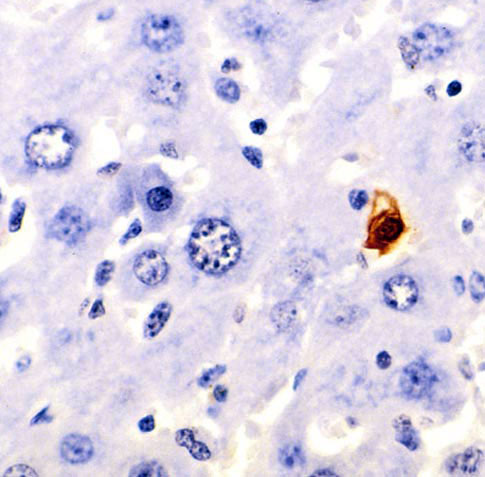
ResearchBlogging.orgApoptosis means doom for an individual cell. As such we tend to automatically assume that apoptosis is a Bad Thing, but in reality apoptosis often is quite necessary for normal physiological function at the organism level. In order for our bodies to maintain the homeostasis that defines so many of our cellular processes, we have to sacrifice some cells. As it turns out, we actually wind up sacrificing enormous numbers of cells every day. Worn out red blood cells, dangerously self-reactive lymphocytes, individual columnar epithelial cells and others. These processes are tightly regulated, so much so that most cell types actually require biochemical signals from neighboring cells, tissues, or even distant organs just to tell them to keep living. The anti-apoptotic survival signals can fall below a threshhold value and/or be overridden by pro-apoptotic stimuli, which normally results in swift induction of the apoptotic program. When individual cells develop mutations that deafen them to these signals, they become dangerous proliferation-happy pre-cancerous cells more interested in their own survival than that of their constituent organism.

Figure A: TUNEL histochemical staining in murine liver, brown cell is apoptotic.

The apoptotic program ultimately results in highly oxidative and degradative enzymes (such as proteases) hidden away in the mitochondria being released into the cytoplasm to wreak havoc. Usually the raw material of a dying cell is tidily absorbed by its neighbors to be recycled. I've always imagined mitochondria as pulsing with a low, gentle buzz in normal cellular physiology with occassional metallic pings as statistical flucuations in the net free energy of electrons falling down the electron transport chain is captured in ATP. Following this, I think the sound of caspase-8 et al slicing open the mitochondria would be like the initial panicked braking shriek of a train loaded with Furbies who are quickly drowned out in the self-amplifying roar like a tornado grinding through a gravel pit as the apoptotic effector enzymes set to work dissolving the cell from within.

Apoptosis is absolutely essential not just to adult homeostasis, but also to normal ontogeny. Without apoptosis organs would fail to separate, fingers would remain stuck together, and many other things would go very, very wrong. There are 2 families of intracellular proteins that battle to determine whether or not a cell will become apoptotic: the (generally) pro-apoptotic Bcl-2 family and the (generally) anti-apoptotic IAP family. Conveniently, IAP stands for Inhibitor of Apoptosis Protein. A recent review by Dr. O'Riordan et al discussed the diverse and essential roles for IAP proteins in normal tissue development across a wide range of model organisms. From ablated organ development in the absence of Diap1 in Drosophila larvae to stunted hematopoeitic developmental repertoire in the abscence of Survivin in mice, IAPs seem to be evolutionarily conserved signal transducers that integrate diverse extracellular signals into a coherent cellular action. Developmentally, the IAP proteins seem to be involved in everything from proper vascularization to chromosome stability, although it is important to note that direct modulation of apoptosis in developmental processes has only been established in invertebrates. Lack of any one of several IAPs in higher chordates has not been directly linked to developmental apoptosis, but several abnormal embryonic phenotypes and attenuated adult functional capacities have been demonstrated.

IAPs are grouped by the prescence of BIRs (baculovirus IAP repeats) and many also have RING domains. Both motifs have been found to have zinc-finger conformations and the interaction of different sections of adjacent BIR motifs in some proteins, such as direct inhibition of pro-apoptotic caspases-3 and -7 by BIR2 of XIAP (X-linked inhibitor of apoptosis protein), has been found to modulate a number of diverse effects. These diverse effects are potentiated by the ubiquitin ligase activity that some RING domains have demonstrated. IAPs help the organism balance necessary apoptosis and unnecessary apoptosis, and because apoptosis is required for the homeostasis of most tissues the IAP family has been evolutionarily conserved and biochemically diversified. IAPs remain an active and engaging area of research that holds great promise in the treatment of pathologies from cancer to intracellular bacterial infections and underscore how a little sacrifice for the team by one cell can make a massive impact on the constituent organism's overall fitness.

IAPs have also been found to modulate innate immunity, which will be discussed in another post.

ORIORDAN, M., BAULER, L., SCOTT, F., & DUCKETT, C. (2008). Inhibitor of Apoptosis Proteins in Eukaryotic Evolution and Development: A Model of Thematic Conservation Developmental Cell, 15 (4), 497-508 DOI: 10.1016/j.devcel.2008.09.012

Additional Source: Molecular Biology of the Cell; Alberts et al; 4th ed.; pages 1010-1014